⛵ How to Book a Yacht Charter: Your Complete Guide to Choosing, Budgeting, and Provisioning
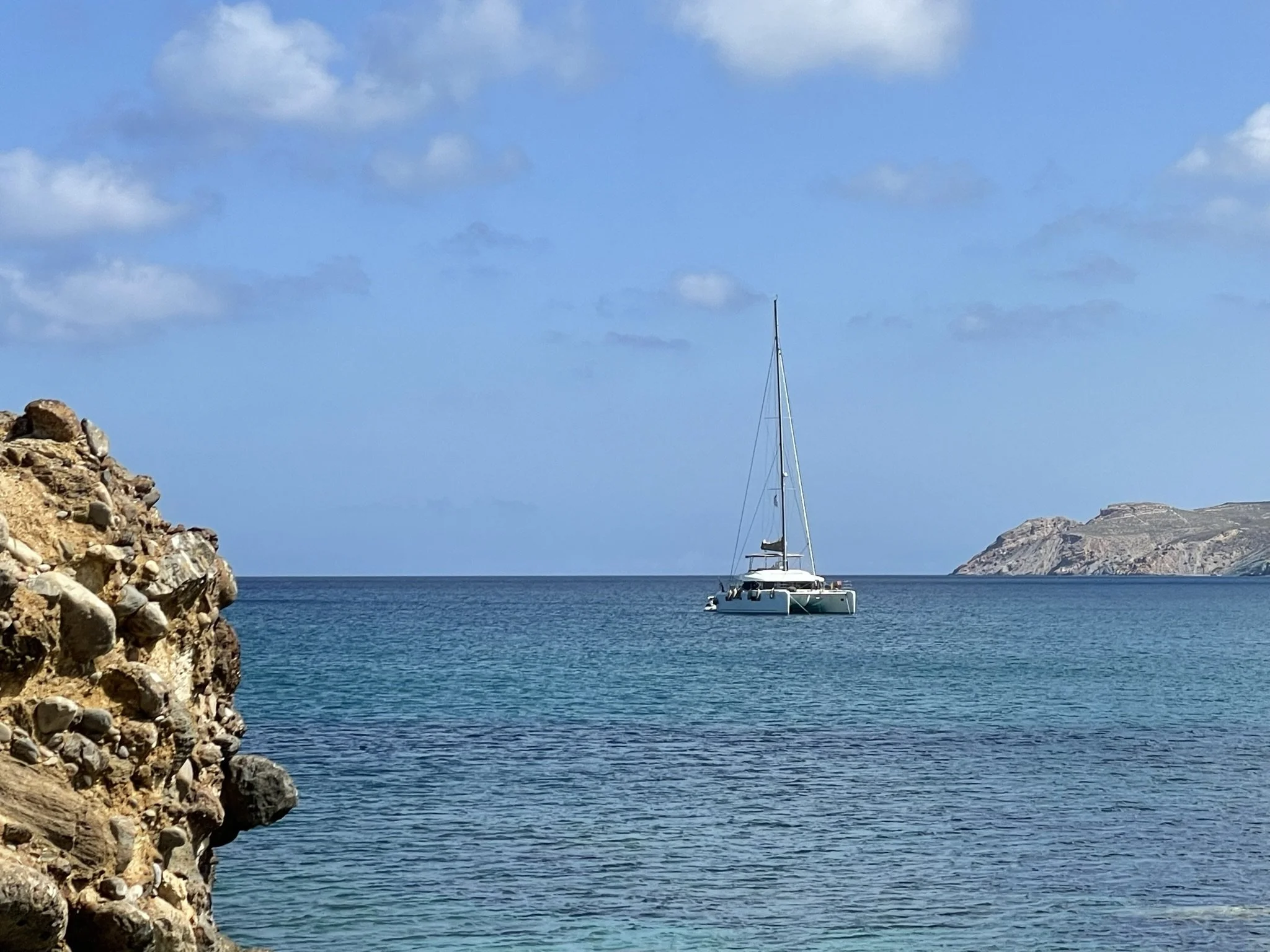
The Flo, Greece, Cyclades, Yacht Charter
Chartering a yacht is a truly remarkable way to explore destinations most easily accessible by water. Since our first trip in 2010—a short 3-night charter on the Joanna K, a 70-foot motor sailer, in the Saronic Islands, Greece—we've navigated the process of booking a yacht charter many times, including trips to Croatia, the Amalfi Coast, the Balearic Islands, Corsica, and the Cyclades.
We've learned a lot from these voyages and want to share this essential knowledge with others interested in traveling by sea.
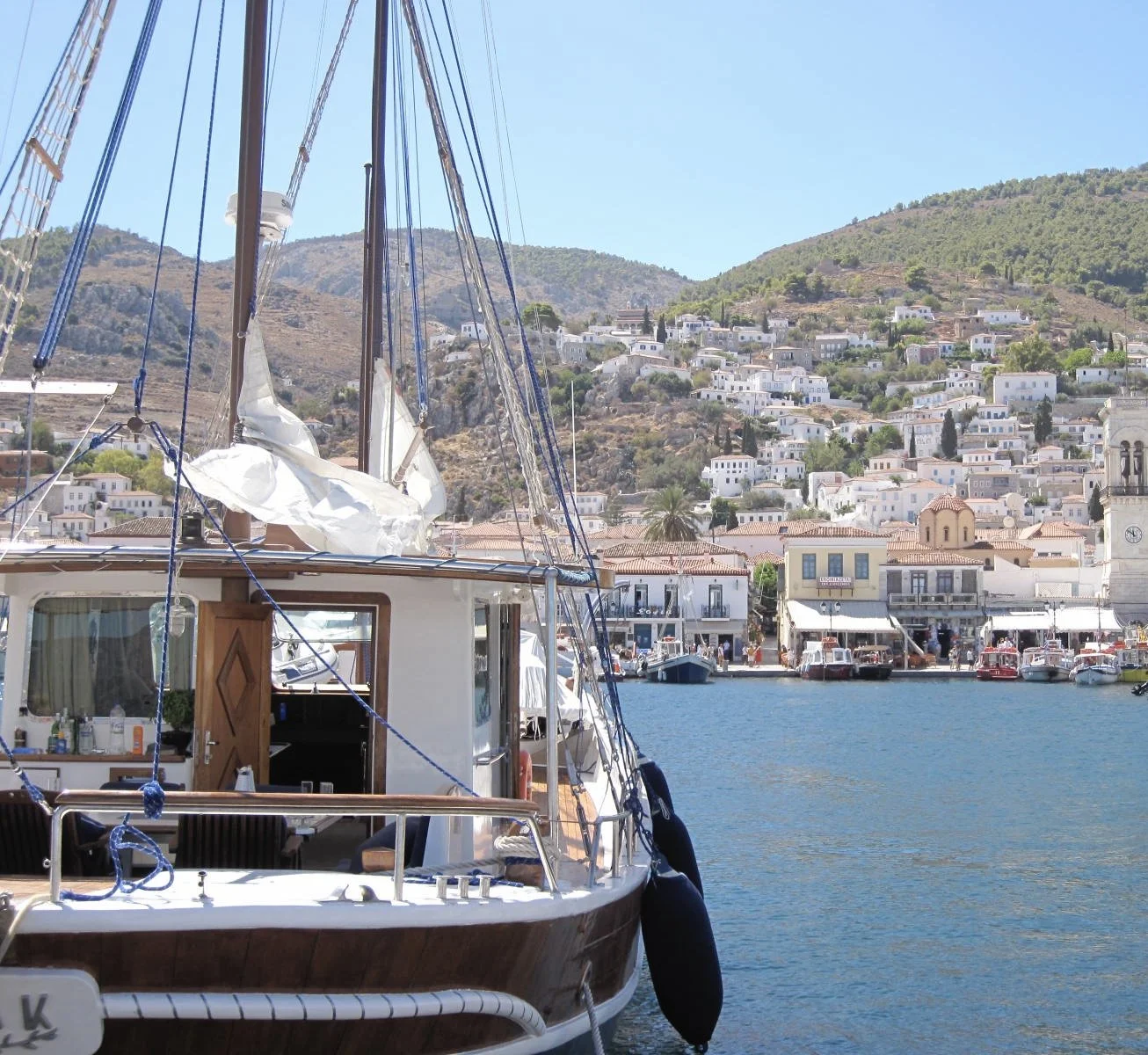
The Joanna K, Greece, Yacht Charter
Step 1: Choosing a Yacht Type and Destination
One of the very first decisions you will make is the type of vessel you want for your charter. Our trips now focus exclusively on sailing catamarans (ranging in length based on group size). We choose catamarans for:
Stability: They offer a much smoother ride.
Deck Space: Ample space for sunbathing, dining, and socializing.
Stateroom Space: Much larger sleeping quarters compared to a monohull sailboat of the same length.
While monohull yachts are faster, the sailing catamaran nicely meets our needs for "putzing around the islands" and provides the space necessary when traveling with a group of friends.
As for destinations, the Mediterranean yacht charter season (April/May to September/October) is a fantastic start. The Caribbean (e.g., the British Virgin Islands) is another option. We strongly believe these charter trips are better experienced with a group of friends!
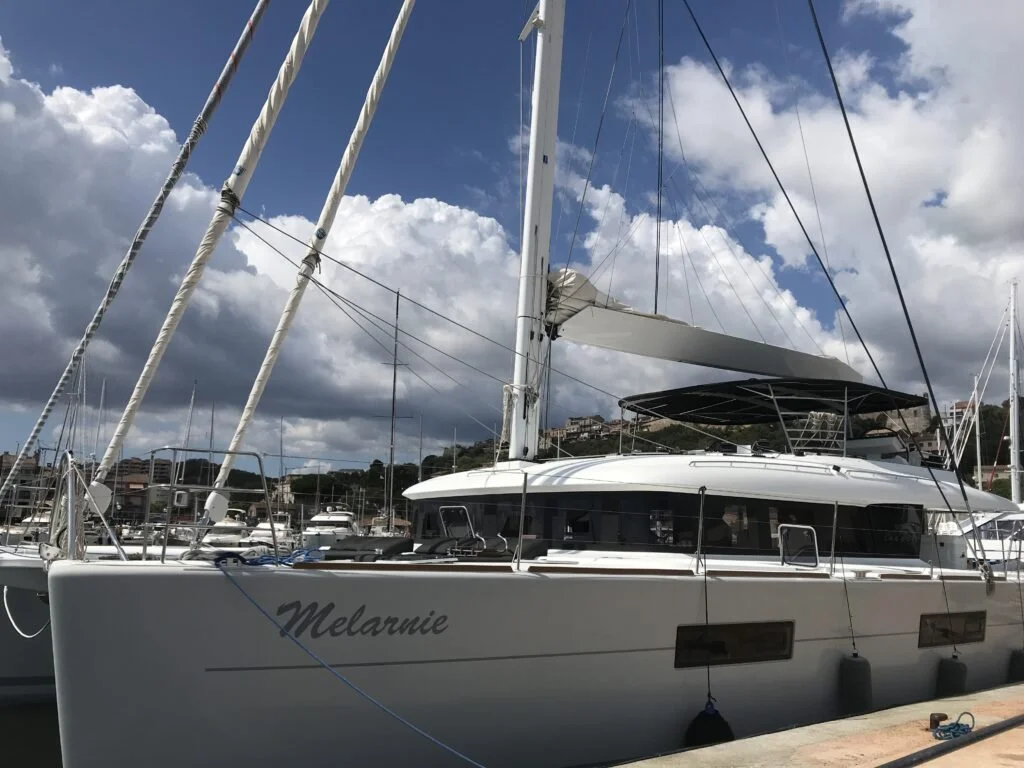
The Melarnie, Corsica, Yacht Charter
Step 2: Determining the Yacht Charter Costs and Budget
Many people assume yacht charters are prohibitively expensive. However, prices are highly variable based on the vessel's age, size, type, destination, crew size, and group size. For a ballpark figure, we find that for an exclusive crewed charter, traveling with a group of 5-7, the charter costs are similar per person to a high-end or luxury cruise.
When calculating your yacht charter budget, you must account for several distinct costs:
The Yacht Charter Fee: The base price of the vessel.
Taxes: VAT (or other applicable taxes).
Advance Provisioning Allowance (APA): A standard, non-fixed fee (detailed below).
Other Fees: Credit card or wire transfer fees for booking.
Personal Travel Costs: Flights, ground transportation, and accommodations getting to and from the embarkation point.
Don't Forget to Tip: Crew gratuity is a separate and essential cost.
Understanding the Advance Provisioning Allowance (APA)
The APA is an allowance used to cover your expenses while onboard, including fuel, marina fees, food, beverages, and other incurred costs. An experienced yacht charter broker will provide a good estimate for the APA based on location and experience. Note: The APA is only an estimate of expenses paid upfront. If you overspend, you must supplement the fund. If you underspend, the remainder can be used for the crew tip or refunded.
Step 3: Deciding When and For How Long?
Most charters require a minimum of 7 nights, but you can find shorter charters if that better meets your needs. We find that 7 nights is the perfect duration to feel rested without being restless. We often combine our charter trip with a land-based trip before or after.
In the Mediterranean, the yachting season is April/May to September/October. June through August is the most crowded and expensive time. We prefer to travel during the shoulder seasons, and have learned that the water is often too cold in May, so we now aim for September in the Mediterranean, when the air and water temperatures are still warm, and tourist crowds have thinned out. In the Caribbean, hurricane season is June to November, so I would avoid those months and target the March/April/May timeframe.
Step 4: Finding a Yacht Charter Broker and Selecting the Yacht
Once you have your key specifications (destination, yacht type, budget, group size, and dates), it's time to find a yacht charter broker. We rely on the team at Endless Blue, and also utilize a travel agent for added peace of mind and an escalation point, as booking a yacht charter is more complex than booking standard flights and hotels.
The broker will provide yacht options based on your needs and budget. For the best selection of available yachts, start looking as soon as the current season ends (around October/November for the Mediterranean). Some yachts move sailing locations after the season, so they may not always sail within the same area year to year. However, yachts do typically have standard embarkation and debarkation points for the season. If there is a yacht you like, but it does not have embarkation where you want to embark, it may be able to be moved for a fee.
What to Look for in a Yacht Selection:
Crew: We recommend a staff of three (Captain, Deckhand, Chef/Cook). Ensure the crew speaks English and the local language and is familiar with the destination—this is the key difference between a good trip and a spectacular one.
Stateroom Equality: Ensure rooms are as evenly sized as possible. While one primary stateroom might be larger, you want all travelers to be comfortable. You will want to determine if the cost for the larger stateroom will be higher.
Embarkation and Debarkation: You will need to determine whether your embarkation and debarkation will be at the same or different points, and if the charter will accommodate
Features and Accessibility: Air-conditioning, easy access to a drinks refrigerator, and snorkel gear have become standard requests for our charters.
After selecting the yacht, a contract needs to be signed and the deposit paid. The person signing the contract (the charterer) becomes the primary point of contact for the Yacht Charter Broker and eventually the Captain. Choose wisely here, as this individual will be handling all the logistics for the charter!
Step 5: Completing the Provisions Request
Approximately 6-8 weeks before embarkation, you will receive a request to provide traveler details, typically including full name, passport country, and passport number. You will also receive a provisions request—details for all the food and beverages needed onboard to make your trip spectacular, and the group’s interests and activities.
To complete your provisions, determine how much time you are spending onboard versus in your ports of call. This includes how many meals you will eat on board. This may vary with your destination of choice. Keep in mind, after they buy it for you, it’s yours whether you consume it or not, so you don’t want to provision too much. However, things get more expensive and less available the further you are from a major port, so you don’t want to run out of essentials either.
Our Approach to Provisions:
Meals: Plan for breakfast and one other meal (lunch or dinner) onboard daily. We like eating locally, so we want at least one meal in town every day.
Local Focus: Ask for food items that are best locally (e.g., seafood near the sea, rather than steak).
Dietary Needs: Communicate all dietary restrictions (vegetarian, no beef, etc.) clearly.
Snacks: Snacks, lots of snacks, and be specific with brands if they are important to you.
Beverages: Estimate generously; these items in particular get more expensive the farther you are from a major port. Our guideline for 6-7 people is a case (or two) of beer a day, and a minimum of 2-3 bottles of wine per meal, and selected bottles of liquor for cocktails, such as vodka, gin, and aperol. Again, be specific with brands if they are important.

Don't forget the bubbly!
Step 6: Defining Your Itinerary Pace & Activities
After the food and drink provisions are finalized, the last part of the preference sheet deals with the group's interests and activity requests. Since every individual is different, the preference sheet must clearly account for the needs of the entire group to ensure a balanced trip.
Having done this with different groups of friends, we recommend planning a schedule that splits the day:
Water Activities & Lounging: Dedicate approximately half a day to water activities (snorkeling, paddleboarding, swimming) and relaxing on deck.
Sightseeing & Shore Time: Dedicate the other half a day to sightseeing, wandering around town, and exploring the local ports of call.
You will also need to communicate your preference for where the yacht spends the night:
Mooring/Anchoring: Spending the night in a quiet cove or bay, which offers serenity and is often less expensive.
Docking in Marinas: Staying in a marina allows easy access to town, shore power, and amenities, but may be louder and more crowded.
We recommend splitting time between mooring/anchoring and docking in marinas, but this decision is ultimately dependent on the weather forecast and marina availability on the route.
Step 7: Welcome Aboard and Ports of Call
Before your trip, your yacht charter broker will provide final details needed to board your vessel, including ground transfer information and the captain’s contact details.
Regarding the ports of call, if you are looking to hit the major destinations accessible by ferry (or cruise ship), you may not be experiencing all that a yacht charter has to offer. A final tip, some of our favorite spots have been hidden islands and destinations we never heard of until the captain suggested them. The unique perspective and secret gems are why yacht charters are a rewarding way to travel!
Ultimately, a yacht charter provides a distinct travel advantage. It’s the optimal way to experience places most easily (or only) accessible by water. This maritime approach offers a unique perspective unavailable from land, relying on the crew’s deep seasonal knowledge to discover authentic ports and hidden gems along the route.
💬 Planning a Yacht Charter? What destination is at the top of your list? Share your dream trip in the comments below!