
🌲 Fire & Ice: A Day at Lassen Volcanic National Park
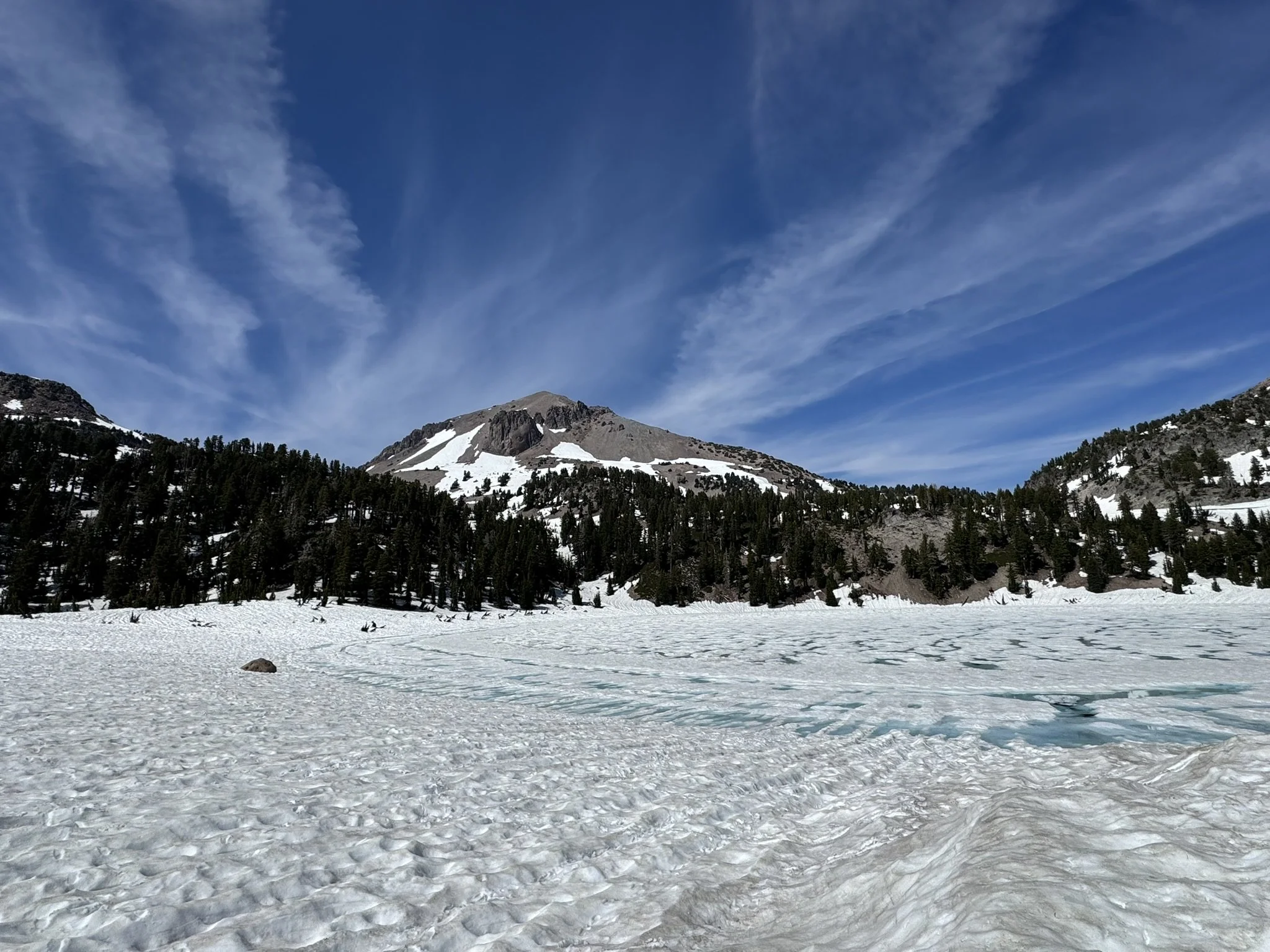
Lassen Peak and Frozen Lake Helen, Lassen Volcanic National Park
Lassen Volcanic National Park is a place where the earth’s raw power and quiet resilience meet. Home to all four types of volcanoes found in the world, it has a rugged, alpine character. Because of the lingering snowpack that kept several main roads closed and our travel schedule, we only experienced a small fraction of what this park has to offer. This visit was just a "taste"—a fleeting glimpse into a vast volcanic wilderness that clearly holds much more to see.
🧭 At a Glance
Park: Lassen Volcanic National Park, California
Official Site: www.nps.gov/lavo/
Month of Visit: June (shoulder season, parts of the park were not accessible)
Duration: Day Trip (en route from Klamath Falls, OR to Red Bluff, CA)
Crowd Level: Moderate
Park Film 🎥: The film The Story Behind the Landscape at the Kohm Yah-mah-nee Visitor Center is essential for understanding the park’s four types of volcanoes.
Vibe: Hushed survival of a park in transition—caught between the blackened scars of the Dixie Fire (2021) and the stubborn winter that refuses to leave the high peaks.
🥾 The Journey
We drove into the park from Klamath Falls, entering through the Southwest Entrance. We had originally planned to enter the park from the Northwest entrance for a scenic drive along the Lassen Volcanic National Park Highway. However, the road was still under its winter closure and had not yet reopened to through-traffic.
Entering the park was a sobering experience. We were immediately met with the vast, scorched remains left by the Dixie Fire. It was shocking—we had never seen a National Park in such a state of devastation. Yet, seeing the blackened trees standing in the leftover winter snow against a brilliant, bright blue sky made the power of nature feel all the more real.
Before our primary trek on the Mill Creek Trail, we stopped in the visitor center to see the park film. But this hike was where the story of the park really came to life for us; we walked directly through the heart of the fire damage. Up close, the contrast was incredible—vibrant green regrowth was already pushing through the charred earth. It was a moving reminder of nature’s ability to reset and recover.
After our hike, we drove from the visitor center to the Bumpass Hell parking area, where the road closure was still in effect. We stopped at Sulphur Works and paused at several scenic spots for photos along the way. Where the road closure began, we took a short walk on the road to see Lake Helen and Lassen Peak before driving back out through the Southwest Entrance toward Red Bluff.
✨ Must Experience Perspectives
Mill Creek Falls: The reward at the end of a tough hike. Seeing the 75-foot falls—the tallest in the park—crashing through a lush, green gorge was the perfect contrast to the charred forest we hiked through to get there.
Sulphur Works: An incredible "miniature Yellowstone." The bubbling mud pots and steam vents offer a raw, sensory look at the hydrothermal heat beneath the park.
Lassen Peak & Frozen Lake Helen: The sight of the massive plug-dome volcano towering over the ice-covered turquoise waters of Lake Helen is breathtaking. Even in late June, the lake was almost entirely frozen, creating a surreal, high-alpine winter scene.
The Glacial Erratic: Located near the Bumpass Hell parking area, this massive boulder was carried miles by ancient glaciers and dropped in its current spot. Standing next to it makes you feel small against the scale of geologic time.
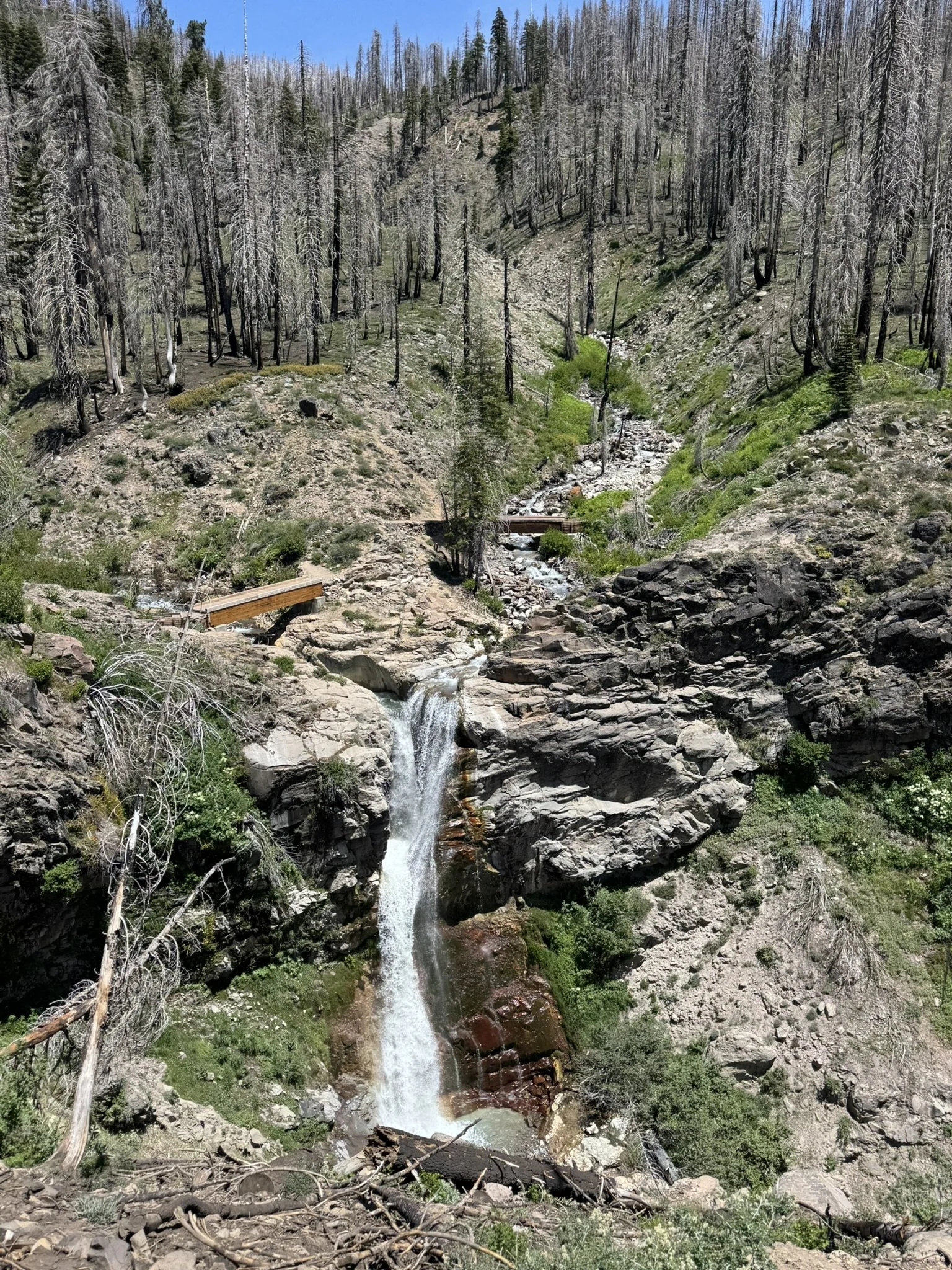
Mill Creek Falls, Lassen Volcanic National Park
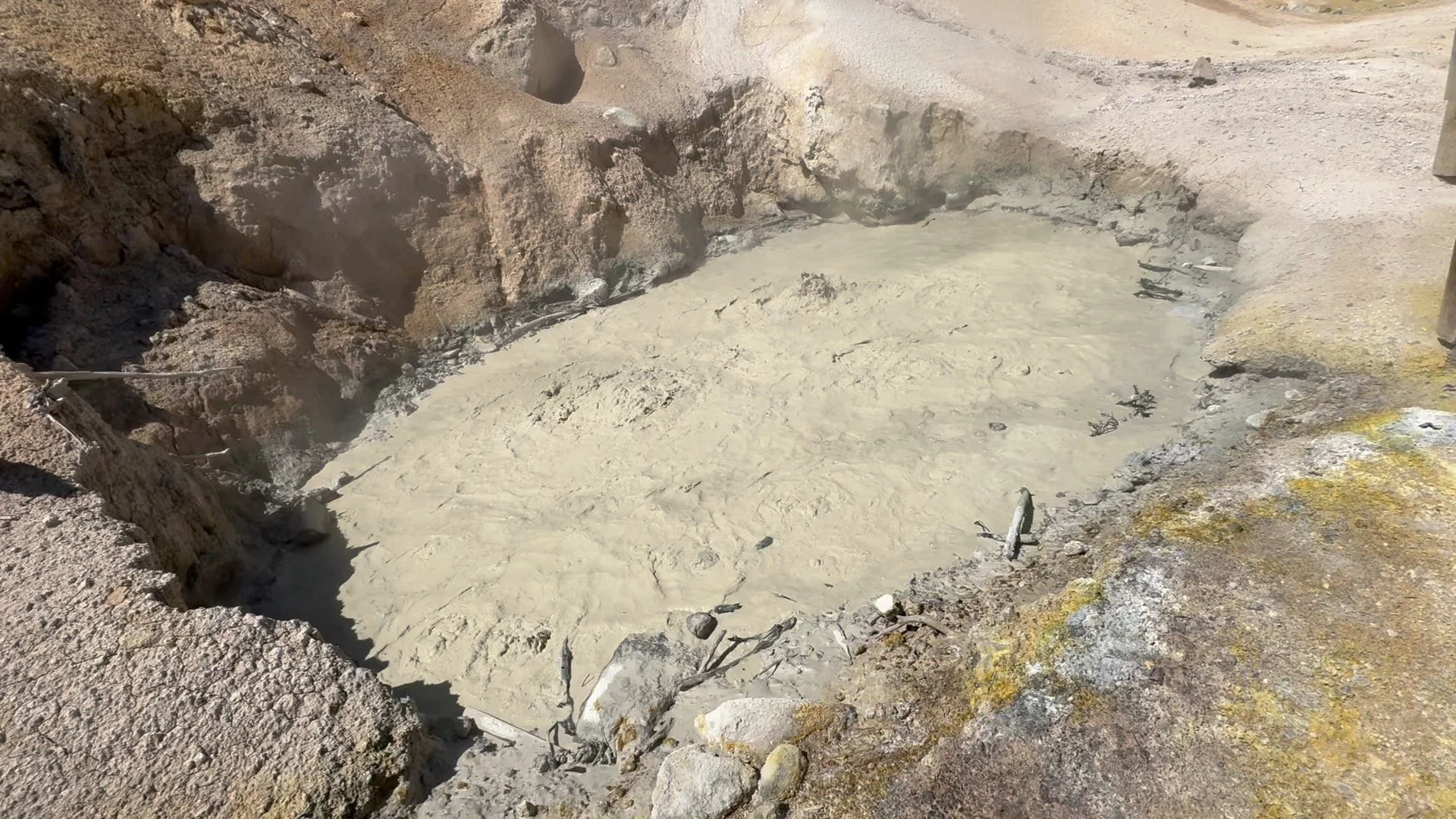
Mud Pot, Sulphur Springs, Lassen Volcanic National Park
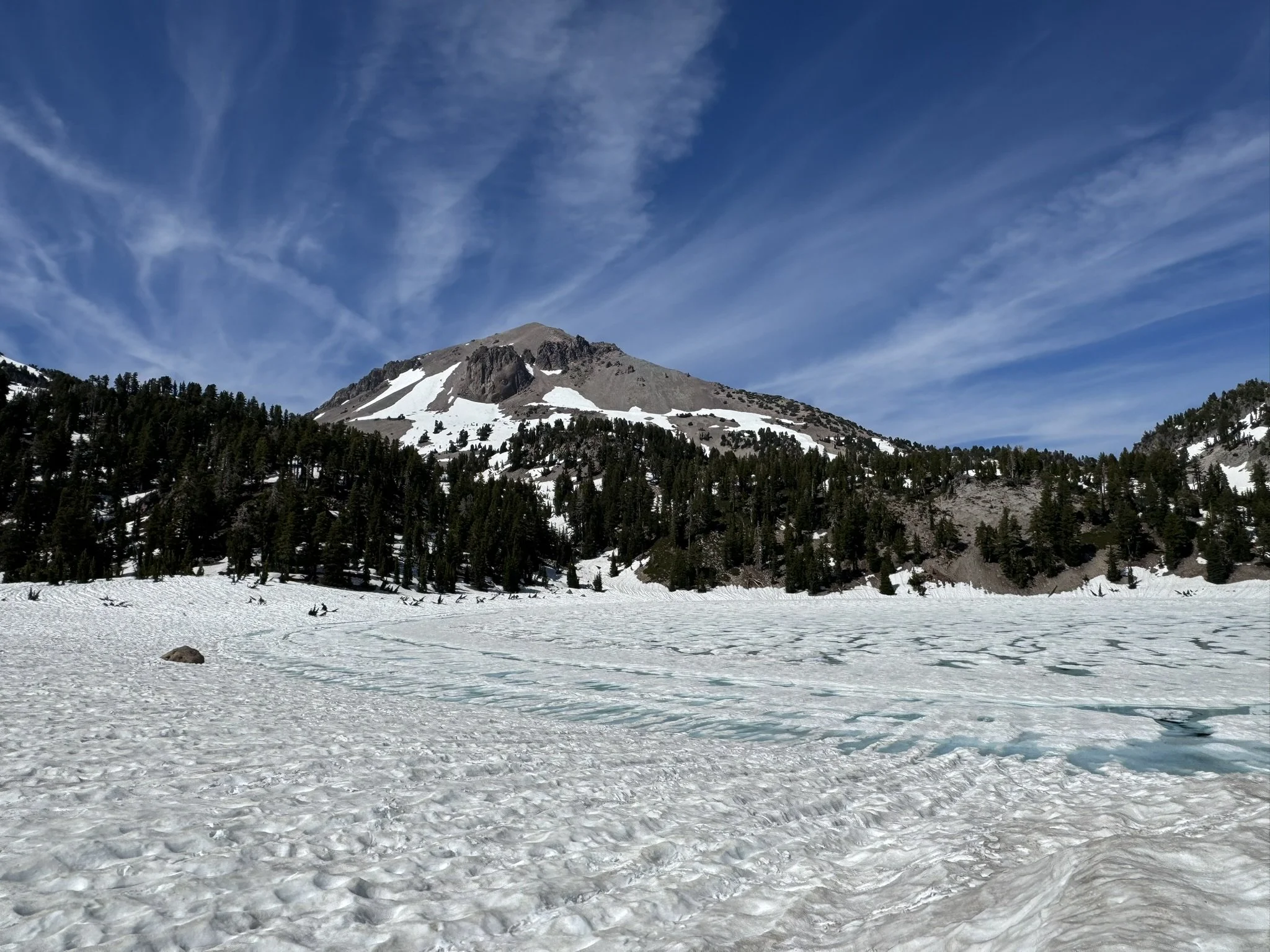
Lassen Peak and Frozen Lake Helen, Lassen Volcanic National Park
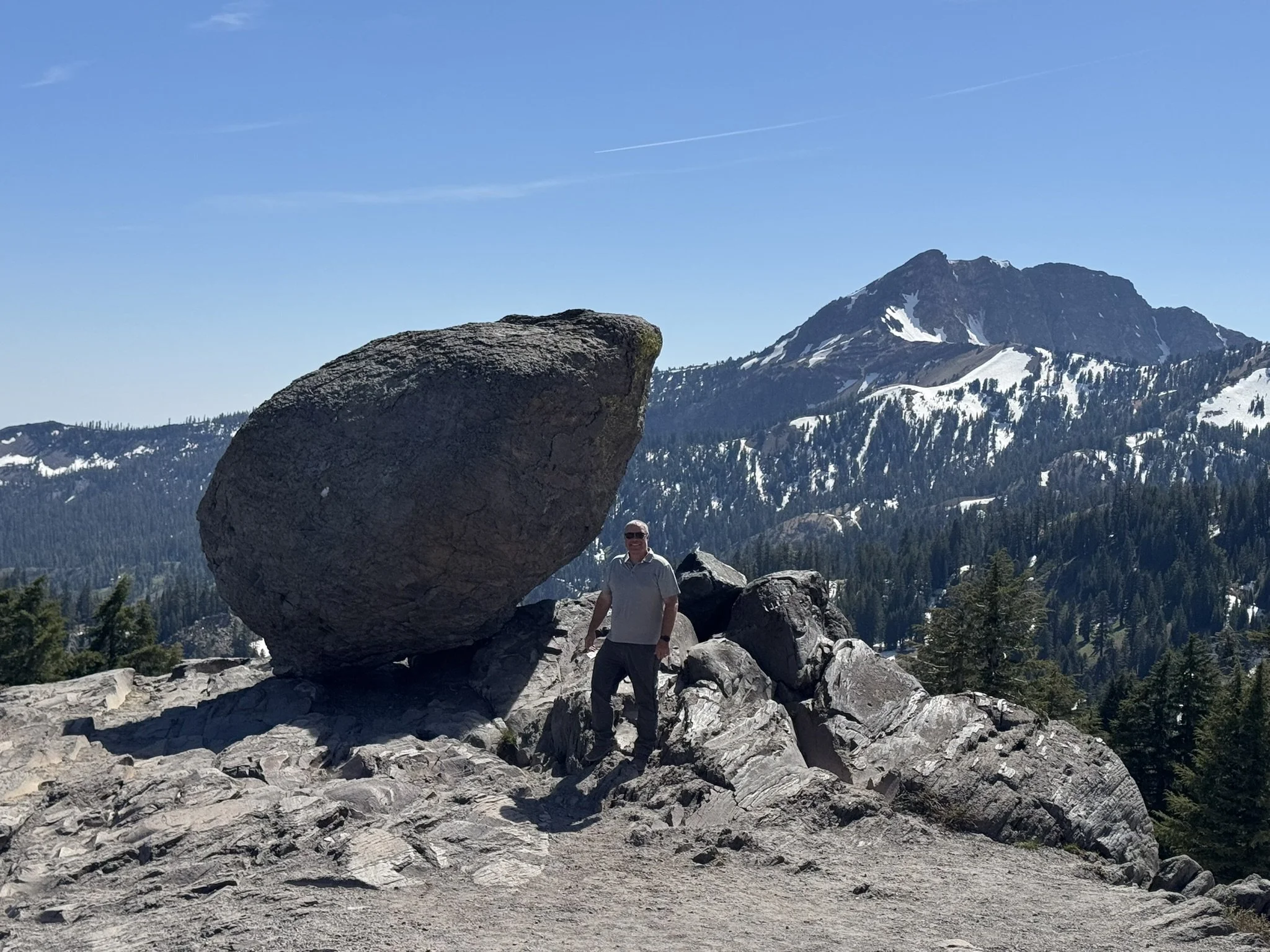
Glacial Erratic, Lassen Volcanic National Park
🎒 The Logistics
Lodging: We stayed the night in Red Bluff, which is about an hour’s drive from the southern entrance. We would have looked for alternative lodgings within the park or closer to the park entrances if we were doing a multi-day visit.
Food: Pack a lunch and plenty of water. There are limited services once you leave the visitor center area, especially with the seasonal closures we encountered.
Park Access: Be prepared for road closures that will last well into summer. We drove as far as the roads were open from the Kohm Yah-mah-nee Visitor Center, which was only about 6 miles. To see Lassen Peak, we had to walk along the closed road from the Bumpass Trailhead parking lot. Also, our planned scenic dive from the Northwest Entrance of the Park was curtailed due to the road closures.
📝 Pro-Tips and Lessons Learned
The "False Falls": On the Mill Creek Trail, you’ll see a small water runoff that many people mistake for the falls. Do not turn around there. You haven't reached the destination yet. When you get to the actual Mill Creek Falls, you will know—it’s unmistakable.
Elevation Warning: The Mill Creek hike is listed as moderate, likely due to the moderate distance of 3.8 miles round-trip. However, the rapid elevation gain to 925 feet makes it more strenuous. We saw hikers on the trail who were clearly not prepared for the physical toll of the climb. And remember if you make it to the waterfall, you still have to get yourself back.
Snow Gear: Don't let the "June" calendar date fool you; it is still winter in the park. With the park still covered in snow, sturdy boots with good traction are a must.
💡 Final Thoughts
Lassen Volcanic proved that beauty doesn't always have to be pristine to be powerful. "Fire and Ice" was present in every mile—from the heat of the sulfur springs to the frozen lakes, and from the devastation of the Dixie Fire to the tiny green shoots of new life. We left knowing we had only scratched the surface, but the "taste" we got was enough to ensure we’ll be back when the roads are clear.
💬 Have you ever visited a place that was physically recovering from a natural disaster? How did it change your perspective on the landscape? Let me know in the comments below! Stay curious, leave no trace, and always watch the park film! See you on the trail!
