
🌲 Granite Peaks & Huckleberries: A Late August Adventure in Glacier National Park
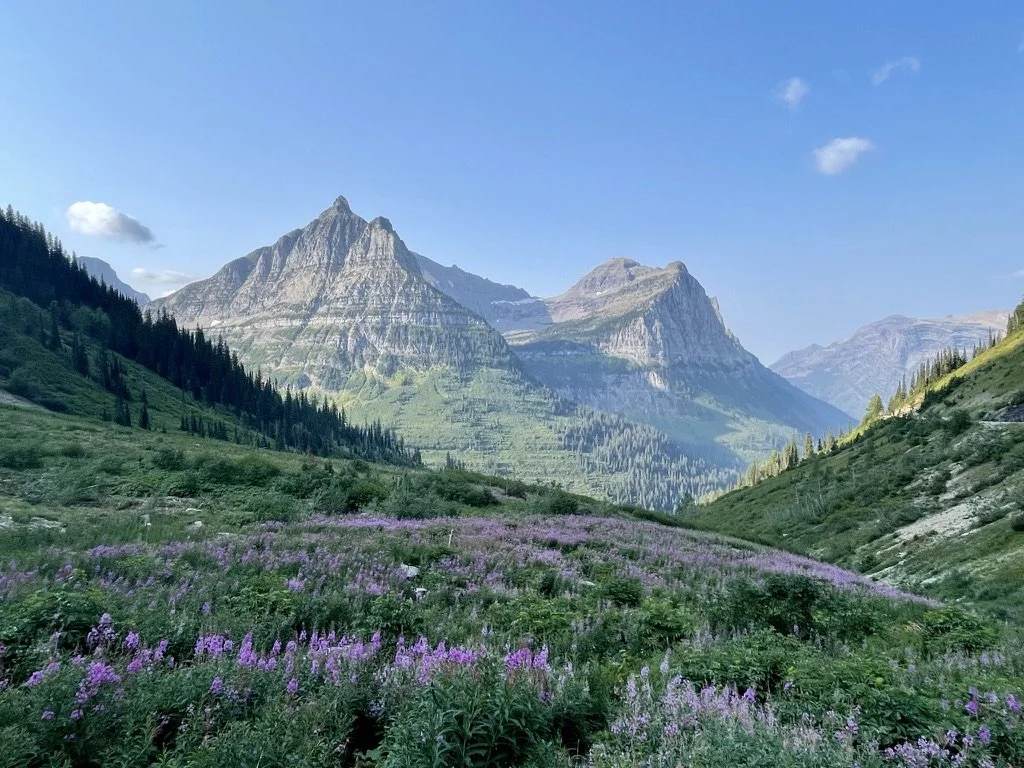
Scenic Stop on Going-to-the-Sun Road, Glacier National Park, Montana
In late August, Glacier National Park is a landscape of jagged granite peaks, vibrant turquoise lakes, and the lingering sweetness of huckleberry season. While the beauty is effortless, the logistics are not—this is a park that rewards the planners. From navigating the reservation system to finding the quiet moments on the trail, here is our perspective on the “Crown of the Continent”.
🧭 At a Glance
Park: Glacier National Park, Montana
Official Site: www.nps.gov/glac/
Month of Visit: August
Duration: 3 Days
Crowd Level: Busy
Park Film 🎥: Land of Shining Mountains at Apgar Visitor Center (West side) or St. Mary Visitor Center (East side).
Vibe: Towering granite cathedrals carved by ice, met with the golden glow of a late-mountain summer.
🥾 The Journey
Our three-day exploration was a study in Glacier’s diverse geography—a transition from the jagged, wind-swept heights of the Continental Divide to the lush, ancient rainforests of the valley floor. Securing vehicle reservations well in advance enabled seamless navigation of the park’s busiest corridors.
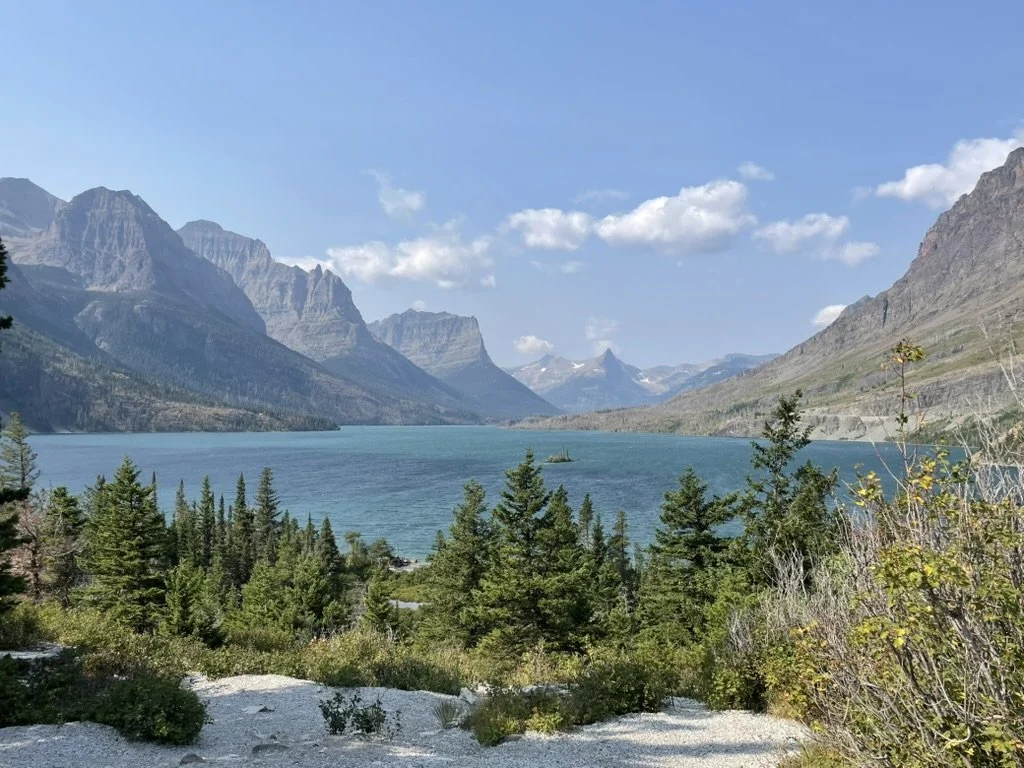
St. Mary Lake, Glacier National Park, Montana
Day 1: The Crossing and the East Side
We began our Glacier adventure by entering through the West Gate and slowly traversing the park’s most iconic artery, the Going-to-the-Sun Road. This drive is more than just a route; it is an immersive transition with essential scenic stops over the spine of the Rockies. We eventually descended the eastern slope into the rugged Many Glacier region, where the mountains feel notably more aggressive and wild.
After a lakeside lunch at the historic Many Glacier Hotel, we visited the St. Mary Visitor Center to watch the park film, Land of Shining Mountains—a ritual for us that provided the geological context for the peaks we had just crossed. We spent the remainder of our afternoon on the park's eastern edge, trekking to the thundering St. Mary and Virginia Falls. The heavy mist and raw power of the water provided a powerful and stunning finale to our exploration of the east side before we began the long, scenic drive back over the pass.
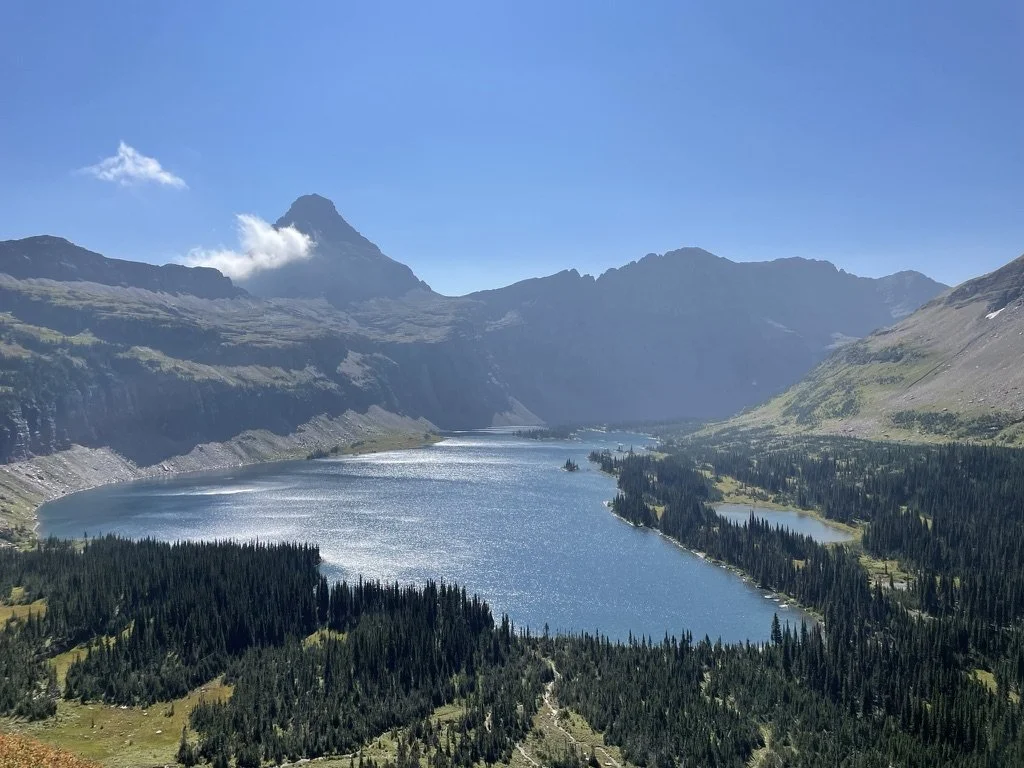
Hidden Lake Trail, Glacier National Park, Montana
Day 2: The High Country
We dedicated our second day to the highest point of our journey, heading straight to Logan Pass for the Hidden Lake Trail. While the initial section was bustling with visitors, we found our solitude by continuing past the overlook—where the peaks drop off into deep, blue basins—and hiking all the way down to the lakeshore. Along the descent, the landscape became more intimate; we shared the trail with a curious marmot and a family of deer, and though we scanned the high cliffs, the mountain goats remained elusive.
The highlight of the day was reaching the water’s edge. Reaching the bottom of the basin changed the perspective entirely, placing us at the foot of the towering peaks we had previously seen from above. We sat by the lakeside for a rest, enjoying the stillness of the water and the high-altitude silence before beginning the steady climb back up. It was a day defined by contrasts—from the expansive vistas to the quiet sanctuary of the lake below.
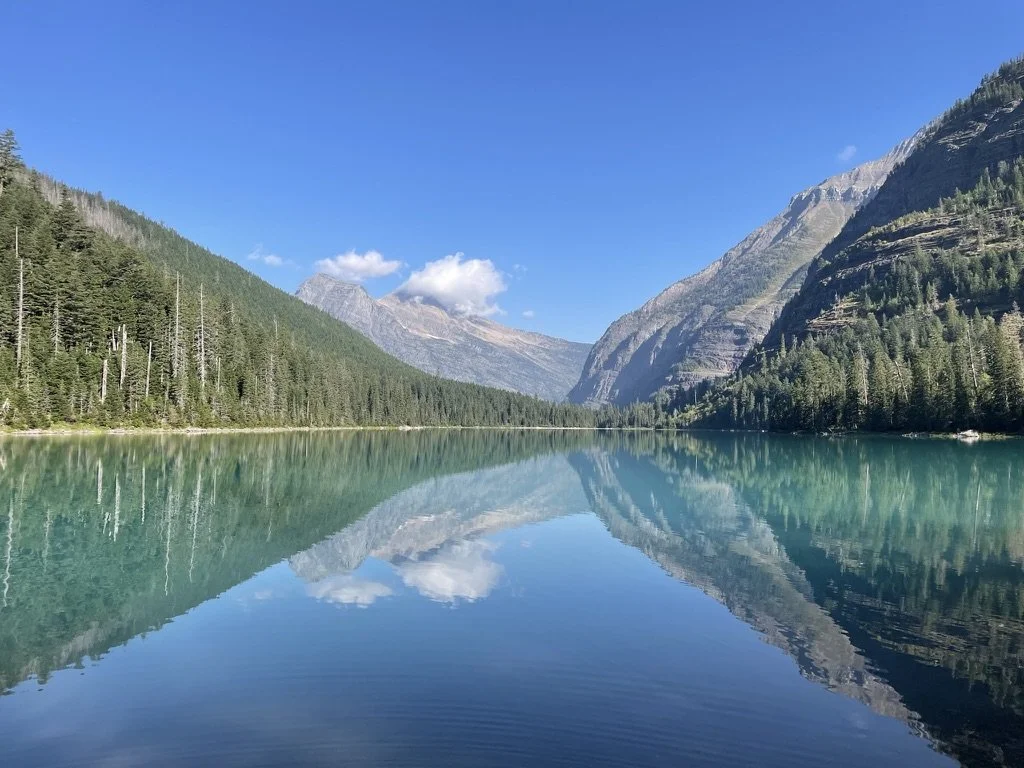
Avalanche Lake, Glacier National Park, Montana
Day 3: The Cathedral & The Creek
We saved our final day for the western valley’s deep greens and moving water. We began with the Trail of the Cedars, following the path as it transitioned from an ancient forest into the steady climb toward Avalanche Lake. Emerging from the intimate canopy into that massive glacial basin—surrounded by 2,000-foot vertical walls and "weeping" waterfalls—felt like stepping into a natural cathedral. The sheer expansiveness of the cirque offered a meditative conclusion to our hiking.
We spent the afternoon following the water back down the valley, stopping at Sacred Dancing Cascades and McDonald Falls to watch the turquoise run-off churn through the park's signature red rock. Our journey then led us to the historic Lake McDonald Lodge for a final meal. We couldn't leave without trying the huckleberry pie. The huckleberry is a local treasure—a wild mountain fruit that cannot be commercially grown, making it a literal taste of Glacier’s wildness. We concluded our journey by sitting on the lodge’s pebble-lined shore, watching the light change over the water for one last moment of reflection
✨ Must Experience Perspectives
Garden Wall Drive: The stretch of Going-to-the-Sun Road heading toward Logan Pass from theWest Gate. Seeing the road literally carved into the side of a vertical cliff is a perspective you can’t get anywhere else.
Big Bend Turnout: The premier spot on the climb up Going-to-the-Sun Road to look back at the route you just traveled as it clings to the side of the Garden Wall.
Many Glacier Hotel Porch: The hotel is a masterpiece of National Park architecture. Standing on the deck looking out at the turquoise water of Swiftcurrent Lake, framed by jagged, "aggressive" peaks, feels like stepping back into the golden age of exploration.
Virginia Falls "Mist Zone": While St. Mary Falls is beautiful, continuing to Virginia Falls is essential. Standing in the "mist zone" of this thundering waterfall provides a powerful connection to the raw energy of Glacier’s waterflow.
Continental Divide (Logan Pass): Standing at the highest point of the scenic Going-to-the-Sun Road that staddles the Continental Divide feels like being on the roof of the world. It offers a perspective on the sheer scale of the Rockies that is both humbling and iconic.
Hidden Lake Basin: Most people stop at the overlook, but hiking down to the lakeshore offers a grander perspective. Reaching the water's edge at the base of Bearhat Mountain allows you to feel the staggering scale of the peaks in a way you can't experience from above.
Avalanche “Glacial Cathedral”: The "verticality" of this basin is unmatched. Emerging from the forest into a space enclosed by 2,000-foot walls and "weeping" waterfalls feels less like a hike and more like entering a natural cathedral.
Huckleberry Pie: A slice of huckleberry pie at Lake McDonald Lodge. Because these berries only grow in the wild and cannot be commercially farmed, this isn't just a dessert—it is a literal taste of the area’s untamed ecology.
Lake McDonald Shoreline: The iconic, colorful prehistoric pebbles beneath the crystal-clear water. Sitting here at the end of the day offers a quiet, reflective perspective on the vastness of the valley you’ve just explored.
🎒 The Logistics
Lodging: We stayed at Cedar Creek Lodge in Columbia Falls. Located just 18 miles from the West Entrance, this mountain-style lodge blends an authentic "lodge feel" with modern comforts. Having a reliable hot breakfast to start the day and an indoor pool and hot tub to ease sore muscles after long hikes made it the perfect retreat.
Food: We balanced packing lunches for the trail with grabbing dinner in Columbia Falls. Anything with "huckleberry" in the name is mandatory in August—from ice cream to jam, it’s the definitive flavor of the region.
Park Access: You absolutely cannot wing it here. Glacier requires timed-entry vehicle reservations for the West Side of Going-to-the-Sun Road and the North Fork from June through late September. If you have a reservation for a "service" inside the park—such as a boat tour or a stay at an in-park lodge—that reservation often serves as your vehicle entry for that specific day. Always double-check the current National Park Service (NPS) rules before you head out!
Transportation: While we drove the Going-to-the-Sun Road ourselves to have maximum flexibility, there are excellent alternatives if you prefer not to drive the narrow cliffs. The iconic Red Bus Tours offer a narrated, historic way to see the sights, and the NPS Shuttles run regularly along the main corridor.
📝 Pro-Tips and Lessons Learned
Vehicle Reservations: Set a calendar marker on your phone to log in the moment reservations open (120 days out). They go fast! If you miss that window, a small batch of next-day reservations is released at 7:00 PM the evening before. Check the NPS site for the most current information.
Early Starts: Even with a vehicle reservation, parking at Logan Pass and Avalanche Lake fills up early. Arrive early—ideally before 7:30 AM—to ensure you actually get to do your planned hike.
Bear Awareness: August is peak season for bears. While bear spray is encouraged, the best defense is making your presence known. We found that talking loudly, clapping, or calling out "Hey bear!"—especially around blind corners or near loud waterfalls is the most effective.
Hydration is Key: The high-altitude air is incredibly dry. Aim to carry at least 1 liter of water for every 2 hours of hiking. Don't wait until you're thirsty to drink; by then, you’re already behind. Keep a cooler with extra water and Gatorade in the car for a "recovery drink" the moment you finish your trek.
The Alpine Sun: At 6,600+ feet, the sun is intense. Even on "cool" days at Logan Pass, you can burn quickly. Wear a hat and apply sunscreen more often than you think you need to.
💡 Final Thoughts
Glacier is a place that stays with you long after you leave. The logistics require a bit of "homework," but standing at the edge of Hidden Lake or feeling the mist of Virginia Falls makes every calendar alert and early morning wake-up call worth it. It is a rare corner of the world where the landscape makes you feel small, offering a rare and welcome sense of perspective.
💬 Have you navigated Glacier’s reservation system and the Going-to-the-Sun Road, or is this park still on your "someday" list? Let’s talk tips and favorite trails in the comments! Stay curious, leave no trace, and always watch the park film! See you on the trail!
